


AI-Powered Mobile Apps: How AI Will Transform User Experience
Posted on : 27 November, 2025
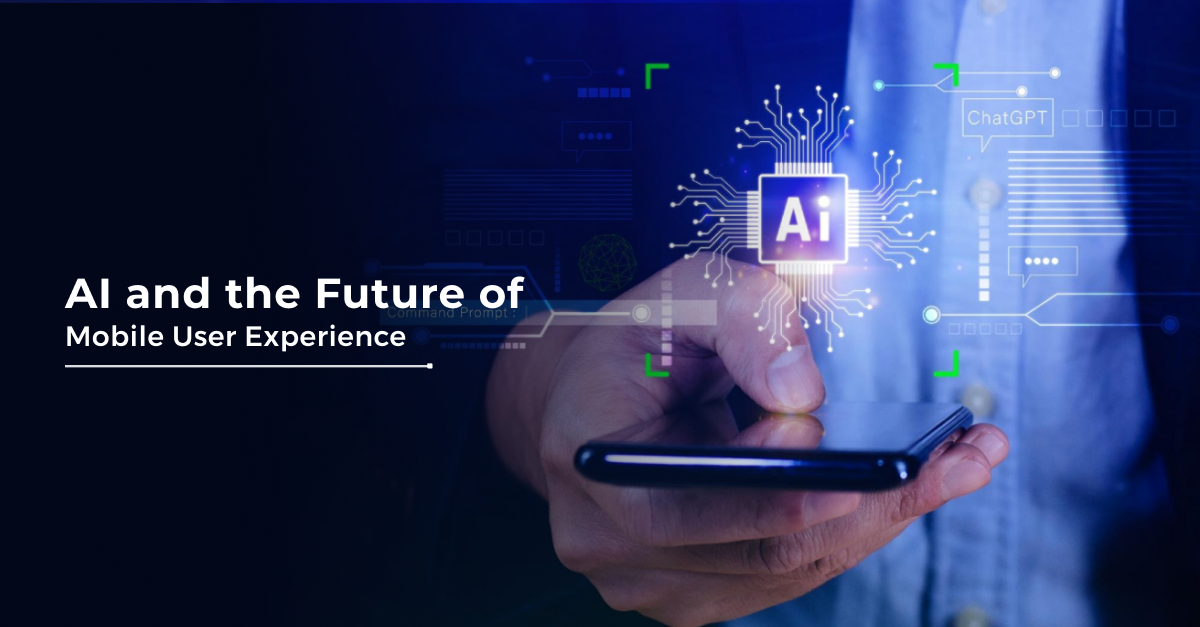
Mobile apps have come a long way in the last decade, but the shift we’re witnessing now is far more significant than the move from 3G to 4G or the introduction of larger screens. Today, we stand at the threshold of a technological transformation led by Artificial Intelligence (AI) a shift that is quietly reshaping how mobile apps behave, respond, and evolve with every user interaction.
In earlier years, apps were mostly static. They followed predefined flows, relied on fixed logic, and delivered the same experience to every user. But modern users expect more they expect apps to understand them, adapt to them, and simplify their daily tasks without requiring constant input. This expectation is exactly why AI-powered mobile apps are becoming the new standard.
AI is not just an enhancement that adds a few smart features. It fundamentally changes the DNA of the user experience. It makes apps perceptive, predictive, and personal. It transforms ordinary workflows into intuitive journeys and brings sophistication to even the simplest tasks.
In this comprehensive guide, we explore how AI-powered mobile apps are redefining user experience, why they matter and what businesses must understand about mobile app development as they prepare for the next era of mobile innovation.
Understanding AI-Powered Mobile Apps: More Than Just Automation

When people hear “AI in apps,” they often think of chatbots or recommendation widgets. But the scope is much larger. An AI-powered mobile app learns from every tap, scroll, query, and interaction to continuously refine how it behaves.
These apps use a combination of:
- Machine Learning (ML) to detect patterns and refine predictions
- Natural Language Processing (NLP) to understand human-like queries
- Computer Vision to interpret images, gestures, and real-world scenes
- Predictive analytics to anticipate user needs
- Behavioral insights to personalize the interface and content
At its core, an AI-driven app is not just software it’s a system that responds like a living, learning entity. And the implications for user experience are massive.
Why AI Matters: The Changing Landscape of User Expectations
Think about how people use apps today. They want everything:
- Fast: No delays, no heavy loading
- Smart: Fewer steps, more automation
- Relevant: Content tailored to their preferences
- Conversational: Human-like responses, not robotic text
- Secure: Safety built into the flow, not added as a burden
Traditional apps struggle to meet these expectations. But AI bridges this gap beautifully.
For businesses, the benefits become clear:
- Higher user satisfaction
- Greater retention
- Increased engagement
- Better monetization
- Strong competitive advantage
AI doesn’t replace the need for UI/UX it enhances it. It turns design into a fluid, adaptive system that evolves with every user.
How AI Transforms Mobile User Experience: A Deep Dive
Let’s break down the major shifts AI brings to mobile UX explained in a way that mirrors how users actually experience them.
1. Personalization Becomes the Default, Not the Bonus
Imagine opening a fitness app that doesn’t just show workouts but curates routines based on your energy levels, previous performances, sleep habits, and even your posture. Or a language-learning app that changes the lesson structure based on where you struggle the most.
This level of personalization is only possible through AI.
AI observes:
- What users explore
- What they ignore
- How frequently they return
- Their preferred features
- Their pace and behavior
Then it adjusts:
- Home screens
- Recommendations
- Content structure
- Display order
- Interactions and triggers
Instead of a “one-size-fits-all” approach, each user gets a tailored journey which dramatically increases retention and engagement.
2. Search Evolves Into a Conversation, Not a Query
Users are no longer satisfied with keyword-based search boxes. They want results based on intent, not exact phrasing.
With AI-enhanced search:
- Apps understand natural language
- Voice queries become more accurate
- Results match context
- Suggestions improve over time
- Search adapts to behavior
A simple example:
Before AI:
Typing “invoice” gives unrelated items if files aren’t tagged correctly.
With AI:
Typing “the bill I sent last week” shows the exact document.
This shift makes apps easier, faster, and more intuitive especially for complex workflows.
3. Intelligent UI That Adapts to Behavior
Static UI is slowly becoming outdated.
AI enables dynamic interfaces that adjust based on how users interact with them. For instance:
- Frequently used buttons become more prominent
- Rarely used menus get minimized
- Navigation flows simplify automatically
- Font sizes adjust for accessibility
- Layouts optimize based on usage patterns
If a user always skips onboarding, the app shortens it.
If another consistently uses dark mode at night, the app automates it.
Design becomes fluid. The interface becomes a living system.
4. Notifications That Users Actually Welcome
Users uninstall apps because of spammy notifications not because they dislike notifications themselves. The issue is relevance.
AI fixes this by analyzing:
- When users are active
- What content they respond to
- What they scroll past
- Their time zone and routine
- Their notification fatigue threshold
With these insights, apps can send notifications that feel perfectly timed and highly relevant.
Instead of “Your cart is waiting,” users receive:
“Looks like you were comparing these items yesterday here’s what changed.”
Subtle. Helpful. High-converting.
5. Smarter Security Without Slowing Down the User
AI transforms app security from a barrier into a seamless experience.
Instead of static passwords and repeated authentication, AI uses:
- Behavioral biometrics
- Facial recognition
- Voice patterns
- Suspicious activity detection
- Predictive fraud prevention
For example, if a login attempt doesn’t match a user’s typical behavior, AI flags it instantly without forcing unnecessary steps on legitimate users.
Security becomes proactive, not reactive.
6. Predictive Assistance That Reduces Cognitive Load
Modern users prefer apps that do the thinking for them.
AI allows apps to:
- Autofill data based on past behavior
- Suggest next steps
- Predict what users intend to do
- Offer shortcuts without being asked
- Surface relevant content faster
For example:
A banking app may highlight a bill due soon based on past payment cycles.
A travel app may pre-load boarding passes when the flight date approaches.
These micro-experiences significantly elevate user satisfaction.
7. Conversational Interfaces That Feel Human
AI-driven chatbots aren’t the simple FAQ bots of the past. Today’s NLP-based systems can:
- Understand tone
- Provide step-by-step solutions
- Personalize recommendations
- Assist with complex tasks
- Replace long customer support queues
This reduces friction for users and lowers support costs for businesses a win-win situation.
8. Voice Experiences Push Us Toward Hands-Free Interaction

Voice-based interfaces are quickly becoming mainstream, especially in:
- Fitness apps
- Home automation
- Navigation
- Education apps
- Utility apps
AI improves accuracy, tone detection, and context understanding. Users can now navigate apps by simply speaking increasing accessibility and convenience.
9. Computer Vision Brings Real-World Awareness to Apps
AI-powered computer vision allows mobile apps to:
- Recognize objects
- Scan documents
- Measure distances
- Interpret surroundings
- Suggest actions based on visual input
Retail, travel, healthcare, and fitness apps are already leveraging computer vision to create immersive experiences.
Example:
A posture-detection system that instantly corrects users during workouts.
10. When AI Meets IoT, Experiences Become Seamless

AI becomes even more powerful when combined with IoT devices.
Apps can now:
- Sync with wearables
- Control smart home devices
- Monitor health data
- Automate everyday routines
AI interprets the data and provides meaningful insights not just raw numbers.
Challenges: What Businesses Need to Keep in Mind
Although AI brings enormous potential, it also demands careful implementation.
Key considerations include:
- User privacy
- Data transparency
- Ethical AI usage
- Avoiding algorithmic bias
- Ensuring accuracy
- Maintaining user trust
Businesses must balance innovation with responsibility.
What the Future Looks Like: The Road to 2030
AI will continue pushing mobile apps into new territories:
- Emotion-aware experiences
- Hyper-personalized interfaces
- Zero-touch user journeys
- Cognitive assistants inside every app
- Predictive automation that feels almost magical
Apps won’t just support users they’ll understand them.
Conclusion
AI-powered mobile apps are not just transforming user experience; they are redefining what users expect from technology itself. The apps of tomorrow will think with you, adapt to you, and evolve alongside you. Businesses that embrace AI now will build apps that stand out, retain users, and deliver extraordinary value.
As mobile experiences continue to evolve, the gap between traditional apps and AI-powered applications will only grow wider. Businesses that move early will gain a decisive advantage by offering users smarter, more intuitive, and deeply personalized interactions. At iPIX, a leading IT Company in India, UAE & USA, we help organizations harness AI to build mobile apps that understand user behavior, adapt in real time, and deliver performance that scales with demand. Our expertise in AI-driven development, predictive UX, intelligent automation, advanced security models, and cross-platform engineering ensures your product is built for the future not just for today. If you're ready to create a mobile app that aligns with the next generation of user expectations, reach out to iPIX and let’s bring your AI-powered vision to life.






































 Talk to our Expert
